A Failed Cooling System Diagnosed Honestly
AC repair in Coopersville for homes and businesses where a central air system has stopped cooling or is operating unreliably
A central air system that stops cooling mid-summer is rarely a single isolated failure—older systems tend to show a pattern of related problems, and replacing one component without checking the others often leads to another call within the same season. Ridge Heating & Cooling diagnoses and repairs central air conditioning for homes and businesses in Coopersville and across West Michigan, with a local team that explains the diagnosis in plain terms and quotes the repair before any work begins. Emergency service is available when the system failure cannot wait for a standard appointment window.
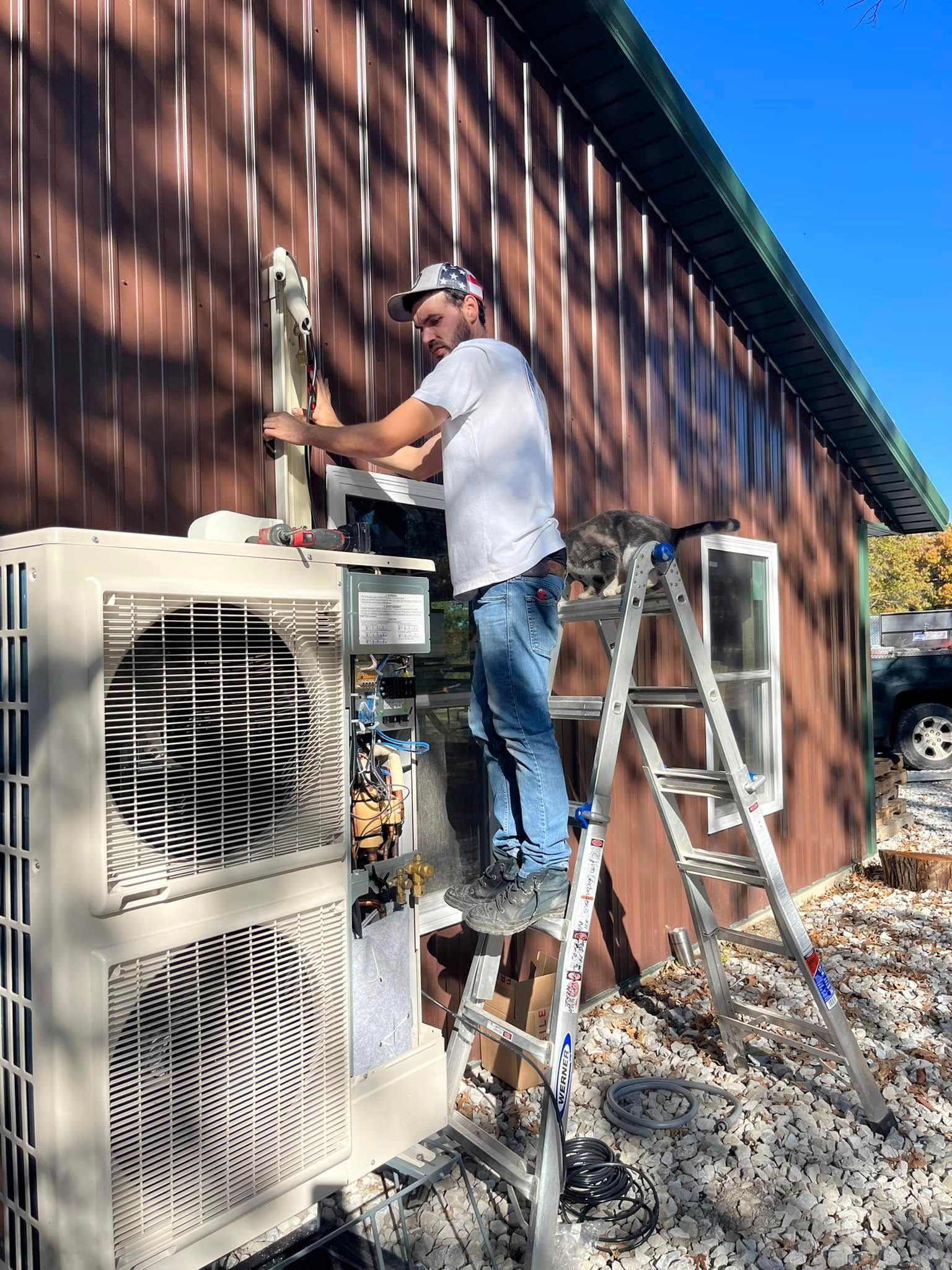
Diagnosis starts at the outdoor condenser and works inward: checking refrigerant charge, measuring compressor amp draw, inspecting capacitors and contactors, and then evaluating the air handler and coil for airflow restrictions and drain issues. Older homes in Spring Lake and Nunica often have long refrigerant line runs between the condenser and the air handler, which means a refrigerant loss can be gradual and the system may cool marginally for weeks before it stops altogether—a pattern that points toward leak detection rather than a straight recharge. Ridge Heating & Cooling carries manufacturer-backed parts warranties as a HEIL elite dealer, and repairs are quoted itemized so the homeowner understands exactly what each part of the fix costs.
To get a clear diagnosis of why your system stopped cooling, request a service appointment with Ridge Heating & Cooling before authorizing any parts replacement.
The Difference Between a Repair and a Recurring Problem
The distinction between a repair that resolves a problem and one that postpones it usually comes down to whether the underlying cause was identified. A capacitor that fails on a hot day is a common repair, but a capacitor that fails on a system where the compressor is drawing high amps will fail again—because the capacitor is not the cause, it is a symptom of a compressor working harder than it should. Measuring compressor amp draw against the nameplate rating is the step that separates a diagnostic repair from a parts swap, and it takes two minutes with a clamp meter.
After a correctly diagnosed and completed repair, the observable changes are immediate: the system holds refrigerant charge through a full run cycle, the condenser fan and compressor operate within normal amperage range, and the indoor temperature drops steadily to the set point rather than stalling several degrees above it. If the evaporator coil was frozen due to low airflow or low charge, it needs to thaw fully before the system is restarted—a step that is easy to skip but causes the same failure to repeat within hours if it is.
Ridge Heating & Cooling is a BBB member and accepts all major payment forms, which matters when an unexpected repair has to be handled quickly. When a diagnostic inspection reveals that multiple components are near the end of their service life, the team presents that information plainly so the homeowner can decide between repair and replacement with an accurate picture of what each path involves—not a sales pitch in either direction.
Questions Before Starting Your AC Repair
The questions below address how AC repair diagnosis and work are performed, including the considerations relevant to older systems common across the West Michigan lakeshore area.
What does an AC diagnostic inspection actually check?
The technician measures refrigerant charge, compressor and fan motor amp draws, capacitor microfarad readings, and thermostat and contactor operation—then inspects the indoor coil for ice and the condensate drain for blockage, because both can cause a system to shut down on a safety switch rather than a component failure.
How is a refrigerant leak found on a system with long line runs?
After confirming the system is low on charge, the technician uses an electronic leak detector at connection points, valve cores, and coil surfaces to locate the source—on systems with long runs between the condenser and air handler, line set joints are a frequent location because vibration over years of operation can work fittings loose gradually.
Why does a frozen evaporator coil happen and what has to be done before the system is restarted?
A frozen coil results from either restricted airflow across it—dirty filter, blocked return—or from operating with insufficient refrigerant charge, both of which cause the coil surface temperature to drop below freezing; the ice has to thaw completely before restart or it will refreeze within one run cycle and trip the safety shutoff again.
How do you determine whether a repair is the right decision versus replacing the system?
The key factors are compressor condition, refrigerant type, and the pattern of past failures—a system running R-22 refrigerant that has already had multiple component failures in recent seasons is a candidate for replacement because the refrigerant itself is no longer in production and the cost of ongoing repairs accumulates against replacement cost quickly.
What should a homeowner check before calling for AC repair to rule out simple causes?
Confirm the thermostat is set to cool and the fan is set to auto, check that the air filter is not completely blocked, verify the condensate drain line is not backed up and tripping the float switch, and confirm the outdoor disconnect switch has not been switched off—these are the most common causes of a system that appears dead but has no component failure.
Ridge Heating & Cooling also handles AC repair in Grand Rapids, Hudsonville, Holland, Allendale, and Rockford. To have your system diagnosed by a local technician who will explain the findings before any repair is authorized, call Ridge Heating & Cooling at (616) 520-8505.