Diagnosing a Furnace Before Replacing Parts
Furnace Repair in Coopersville for no-heat calls, ignition failures, and blower faults across all brands
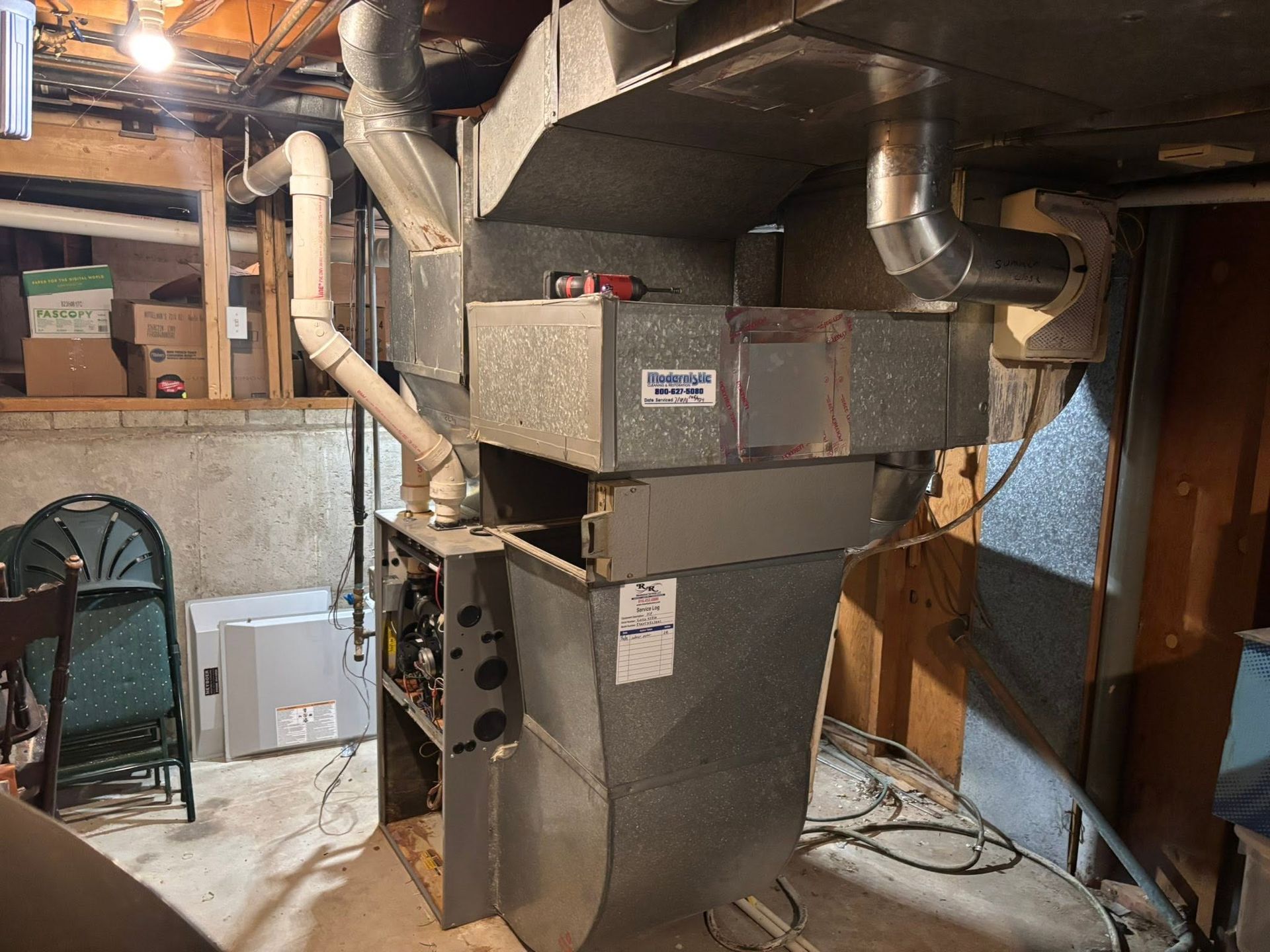
The igniter, flame sensor, and blower motor account for the majority of no-heat calls in suburban homes that have run their furnaces through many heating seasons without service. Ridge Heating & Cooling repairs furnaces of all brands for homes across Coopersville and the surrounding suburbs, beginning every call with a diagnostic sequence that identifies the failed component rather than replacing parts on speculation. Neighborhoods like Wyoming and Walker contain a substantial stock of homes built in the 1970s and 1980s where original or near-original furnaces were replaced once but the second unit is now approaching failure age itself.
The technician checks ignition, gas valve operation, flame sensor resistance, blower function, and every safety switch in sequence before naming a repair. That structured approach prevents the common pattern of replacing the igniter when the real fault is a cracked flame sensor signal wire, or chasing a no-heat complaint caused by a tripped secondary limit that resets itself if the filter is cleared. As an elite HEIL dealer, Ridge Heating & Cooling services HEIL units and all other residential and light commercial furnace brands, with the same diagnostic discipline applied regardless of manufacturer.
Schedule an on-site diagnostic visit so the fault can be identified and the repair scope explained before any work begins.
Why Accurate Diagnosis Changes the Repair Outcome
A furnace repair that starts with parts replacement rather than diagnosis often resolves the immediate symptom while leaving the underlying cause in place. Flame sensors, for example, accumulate oxide buildup that increases resistance and causes intermittent lockouts, but the same symptom can come from a gas valve that is slow to open, a pressure switch that is not seating fully, or an inducer motor that is losing RPM. Measuring sensor resistance with a meter and reading fault codes from the control board together narrow the cause to a single component rather than a category of components.
After a completed repair, the furnace lights on each call, runs through a full heating cycle without locking out, and the blower delivers consistent airflow at every register. Ridge Heating & Cooling backs furnace repairs with a one-year workmanship warranty and manufacturer warranties on replacement parts, so the documentation of what was done and what was installed stays with the homeowner. Emergency service is available when no-heat conditions require a same-day response.
Ridge Heating & Cooling operates as a small, hometown company that prices the repair fairly and gets approval before any part is installed. The technician explains what failed, what the repair involves, and what the alternative options are if the repair cost approaches the unit's remaining useful value—information that most homeowners need before committing to either path.
Answers About How Furnace Repair Works
These questions address the diagnostic and repair process so homeowners understand what to expect from a furnace service visit and how repair decisions are reached.
What does a furnace technician check during a no-heat diagnostic?
The technician reads any fault codes stored in the control board, then checks the igniter for continuity, measures flame sensor resistance, verifies gas pressure at the manifold, tests the inducer motor and pressure switch, and operates each safety limit switch to confirm it resets at the correct temperature.
How do you know whether a repair makes sense versus replacing the unit?
Furnaces under fifteen years old with a single failed component are generally sound repair candidates; units showing cracked heat exchangers, repeated control board failures, or combustion anomalies that return after repair are closer to replacement territory regardless of age.
Why does a flame sensor cause intermittent shutdowns rather than a complete failure to start?
The sensor's job is to confirm a flame is present by measuring a small current through the flame itself; oxide buildup increases resistance and causes the signal to drop below the control board's threshold, triggering a lockout after ignition rather than preventing it—a pattern that returns every few cycles until the sensor is cleaned or replaced.
What should a homeowner do before the technician arrives for a no-heat call?
Check that the filter is not completely blocked, verify the thermostat is set to heat and calling above the current room temperature, and note any error codes or blinking light patterns on the furnace's control board, which the technician will use to shorten the diagnostic sequence.
How does the construction era of homes in Coopersville affect furnace repair complexity?
Homes built before 1990 often have furnaces vented into masonry chimneys that have deteriorated or been relined, and when those venting conditions are marginal, a repaired furnace may still experience nuisance trips on the high-limit because combustion air is restricted at the appliance rather than from a component fault.
Ridge Heating & Cooling also handles furnace repair in Hudsonville, Grand Rapids, Holland, Allendale, and Rockford. To arrange a diagnostic visit or discuss a no-heat situation that needs same-day attention, call (616) 520-8505 with the furnace brand, model, and any fault codes visible on the control board.