
Sized for the Household, Connected to Code
Water heater installation in Coopersville for homes running undersized or aging tank units
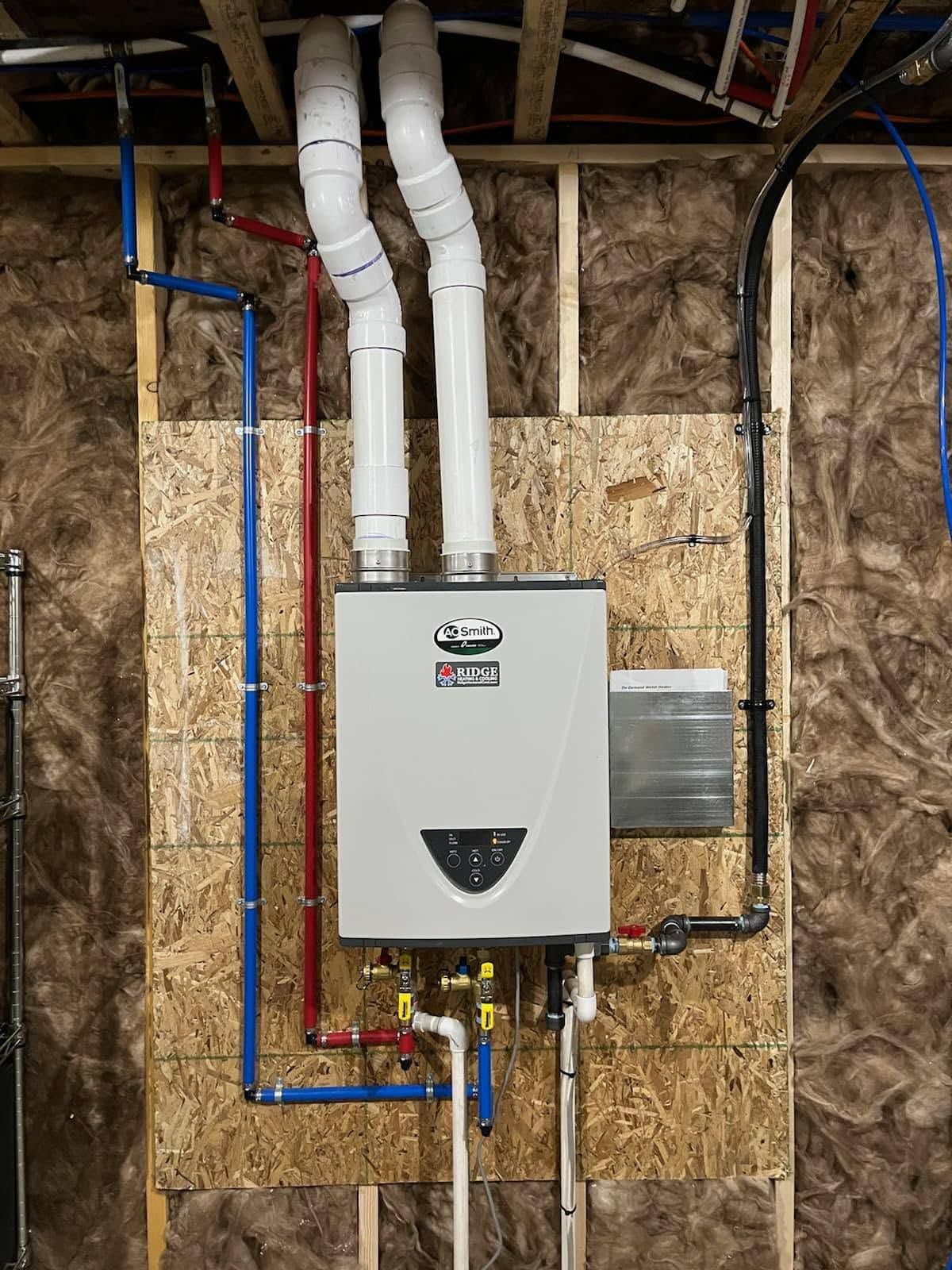
Tank water heaters are sized for the household living in a home at the time of installation. Across Ottawa, Kent, and Muskegon counties, a large share of the housing stock—from older farmhouses on the rural metro edge to newer suburban subdivisions—is running equipment that was spec'd for a different occupancy than the current one. Ridge Heating & Cooling installs tank and tankless water heaters in Coopersville and across West Michigan, sizing the replacement unit to current household demand, setting it to code, and testing it completely before leaving the job.
Installation begins by confirming what the existing gas, venting, or electrical service can support, which determines whether the replacement is a direct swap or whether the connection point needs to be brought up to current requirements. The unit is set level, connected, and pressure-tested for leaks before the system is commissioned. Ridge is a Ferris State HVACR program graduate operation and an elite HEIL dealer, which means the technicians have formal trade training and the equipment sourcing relationships to put the right unit in rather than the most available one. A one-year workmanship warranty and applicable manufacturer's warranties back the installation.
Arrange an on-site assessment to confirm the right unit size and connection requirements for your home before the existing heater fails entirely.
What the Installation Actually Accomplishes
Replacing a water heater isn't just swapping one tank for another—it's an opportunity to correct sizing, venting configuration, and connection quality that may have been marginal since the original installation. The technician evaluates the existing setup before selecting the replacement: gas line sizing, venting type and routing, and the physical location all affect which unit installs cleanly and which requires additional work to connect correctly.
After installation, the observable change is consistent hot water delivery matched to actual household demand. A household that had been running a heater spec'd for fewer occupants will notice that hot water holds through back-to-back usage rather than dropping off. Ridge Heating & Cooling confirms proper operation with leak checks and temperature verification before the job is considered complete—the technician doesn't leave a newly connected unit unverified.
Tank and tankless units serve different households depending on usage pattern and available connection type. Tankless installation involves additional considerations around gas line capacity and venting requirements that differ from a standard tank replacement. Both options are within scope; the right choice depends on the home's current infrastructure and the household's usage demands, which the assessment visit is designed to establish.
Common Questions About the Work
Water heater installation involves decisions about unit type, connection requirements, and what the existing infrastructure will support. The following addresses what property owners typically need to understand before and during the job.
How is the right tank size determined for a household?
Sizing is based on first-hour rating—the volume of hot water the unit can deliver in the first hour of use—matched to the number of occupants and peak usage patterns. A unit undersized for the household will run out of hot water under normal use; a unit oversized wastes energy maintaining heat in water that isn't being drawn.
What does confirming the existing gas or electrical service involve?
The technician checks that the supply line, valve, and connection point are the correct size and type for the replacement unit. Gas-fired installations also require confirming that the venting path is appropriate for the new unit's exhaust requirements—older homes in Coopersville and surrounding areas sometimes have venting that was sized for a different appliance or efficiency rating.
Why does the venting configuration matter for a gas water heater replacement?
Different water heater models have different exhaust volumes and connection types. A direct-vent unit requires a sealed two-pipe system; a power-vent unit pushes exhaust horizontally through PVC; a standard atmospheric unit uses a B-vent flue. Installing a unit whose venting requirements don't match the existing setup is a safety issue, not just a code issue.
What happens during the leak and operation test at the end of installation?
The technician pressurizes the water connections and checks every joint before restoring supply. For gas units, connections are tested with leak detection solution. The unit is then run through its initial heating cycle to confirm ignition, thermostat response, and that relief valve operation is correct before the job is closed out.
How does a tankless unit installation differ from a tank replacement in terms of what's required?
Tankless units heat water on demand and draw significantly more gas or electricity at the moment of use than a tank unit does. That means the existing gas line or electrical panel must be evaluated for capacity before the unit is selected. In homes in Wyoming or Walker where the original service was sized for a tank unit, an upgrade to the supply line or panel may be part of the installation scope.
Ridge Heating & Cooling also installs water heaters in Grand Rapids, Hudsonville, Holland, Allendale, and Rockford. To confirm unit sizing and connection requirements for your home, schedule an assessment with Ridge Heating & Cooling so the installation is planned before the existing unit forces the decision.