Heating System Condition Explained in Plain Terms
HVAC inspections in Coopersville for buyers, owners, and properties with aging systems
A furnace that runs isn't necessarily a furnace in good condition. Buyers of older homes and rural properties across Kent and Ottawa counties regularly discover after closing that the heating system had been limping along—venting misaligned, heat exchangers fatigued, or gas connections that hadn't been reviewed in years. Ridge Heating & Cooling provides HVAC inspections for homes and buildings in Coopersville and across West Michigan, with every inspection performed by a licensed technician who explains what they find in plain language and gives an honest assessment of what needs attention now versus what can wait.
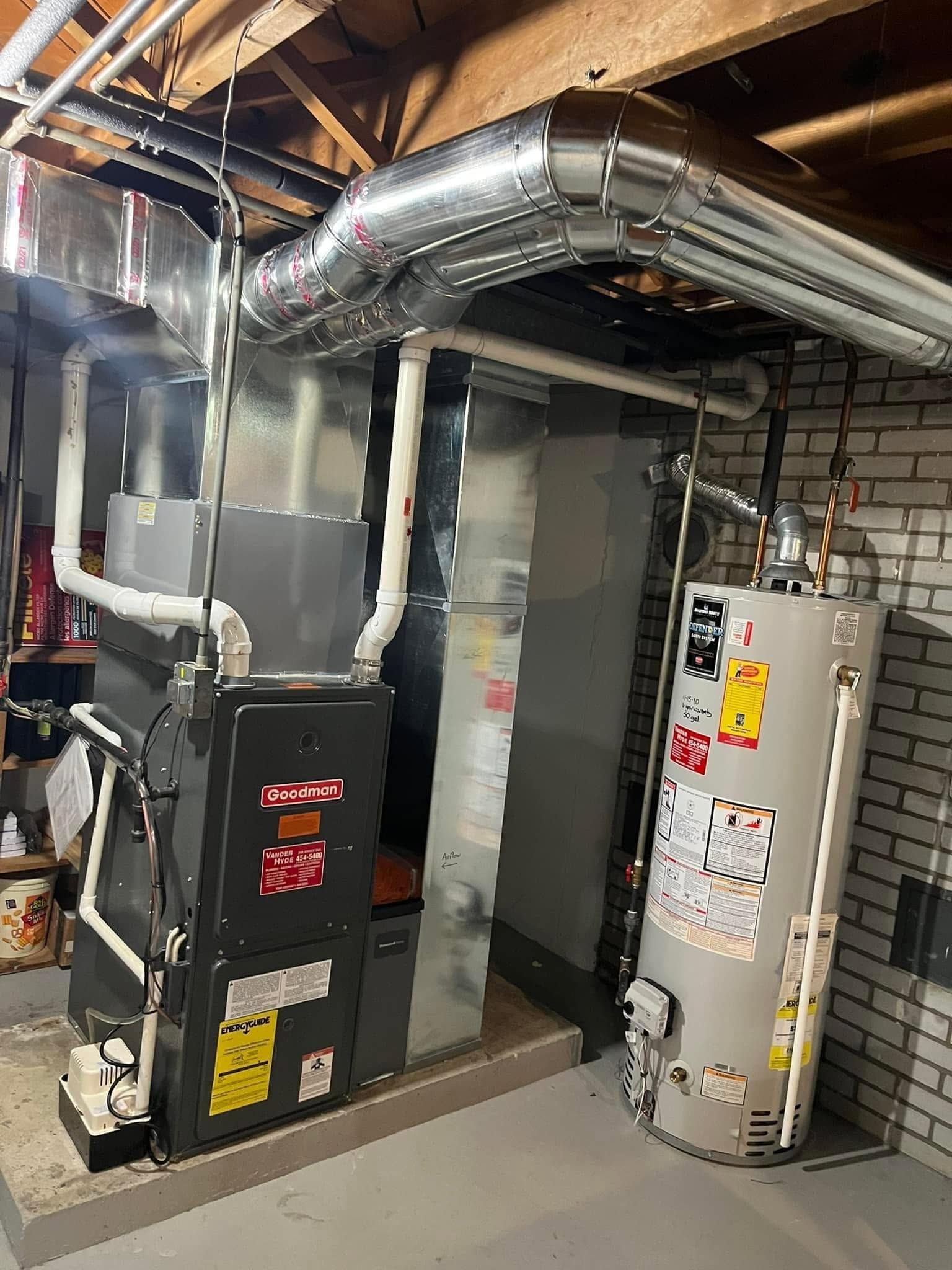
The inspection covers the furnace or boiler, venting configuration, gas connections, safety controls, airflow through the distribution system, and the general condition of major components. At the end, you receive a written summary organized around what works, what needs attention, and what is serviceable for now. That document gives buyers a factual basis for negotiation and gives current homeowners a clear maintenance roadmap. Ridge is a BBB member and a Fair State HVACR program graduate, which means the technician performing the work has formal training in diagnosing the kinds of systems commonly found in West Michigan's older housing stock.
Schedule an inspection before your closing date or before the heating season begins so the written summary is in hand when decisions need to be made.
What Proper HVAC Inspection Requires
A thorough inspection isn't a visual pass-through—it's a functional evaluation of each component in sequence. The technician starts at the heat source, testing ignition, burner operation, and heat exchanger integrity, then moves through venting to confirm exhaust gases are routed correctly and that combustion air supply meets current standards. Safety controls are tested under operating conditions, not just observed. Airflow is measured at key points in the distribution system to identify restrictions or imbalances that affect performance.
What you have at the end is a documented picture of the system's actual condition rather than a verbal impression. Older properties in communities like Cedar Springs—where farmhouses and rural homes were often built with venting arrangements that met the standards of their era but not current codes—frequently surface venting or combustion air issues that aren't visible without testing. Once the written summary is in your hands, the findings are organized so you can distinguish between items that affect safety, items that affect reliability, and items that are advisory.
The inspection scope covers the heating system and associated components. It is not a service visit and does not include cleaning, adjustments, or repairs, which keeps the evaluation independent of any work recommendation that follows. If the summary identifies items that need attention, that becomes a separate conversation about priorities and options.
Answers About How the Work Is Done
Property owners and buyers often have questions about what an HVAC inspection actually covers and how to read the findings. The answers below address the inspection itself rather than the business around it.
What does a heat exchanger check involve during a furnace inspection?
The technician examines the heat exchanger for cracks or fatigue using visual inspection and, where access allows, instrumented checks. A compromised heat exchanger allows combustion gases to mix with circulated air—it's the failure mode that makes furnace condition matter beyond simple heating performance.
How is venting evaluated for an older home?
Venting is traced from the appliance to the termination point outside. The technician checks for proper pitch, joint integrity, clearances from combustibles, and whether the venting type is appropriate for the equipment connected to it. Older homes in Coopersville and surrounding rural areas were frequently built with gravity-type venting that may not meet current standards for newer, higher-efficiency appliances.
Why do safety controls get tested under operating conditions rather than just visually checked?
Safety controls are designed to respond to conditions—over-temperature, loss of flame, blocked flue—that only occur when the system is running. Observing a control that isn't being asked to do anything tells you nothing about whether it will respond correctly when needed.
What does the written summary include and how is it organized?
The summary identifies each component evaluated and categorizes findings by urgency: items that affect safe operation, items that reduce reliability or efficiency, and items to monitor. That structure lets a buyer or owner prioritize without having to interpret technical language.
How does the age and construction type of a property affect what the inspection focuses on?
Older homes—particularly farmhouses and rural properties common in Kent and Ottawa counties—tend to have equipment with more hours of operation, venting that predates current code requirements, and gas connections that haven't been reviewed in years. The inspection scope is the same, but the technician pays particular attention to components that show wear patterns consistent with the system's age.
Ridge Heating & Cooling also performs HVAC inspections in Grand Rapids, Hudsonville, Holland, Allendale, and Rockford. To arrange an inspection for a property you're purchasing or currently own, contact Ridge Heating & Cooling directly so the written summary is ready before it's needed.